Seasonal Olive Grove Care: A Month-by-Month Guide for UK Growers
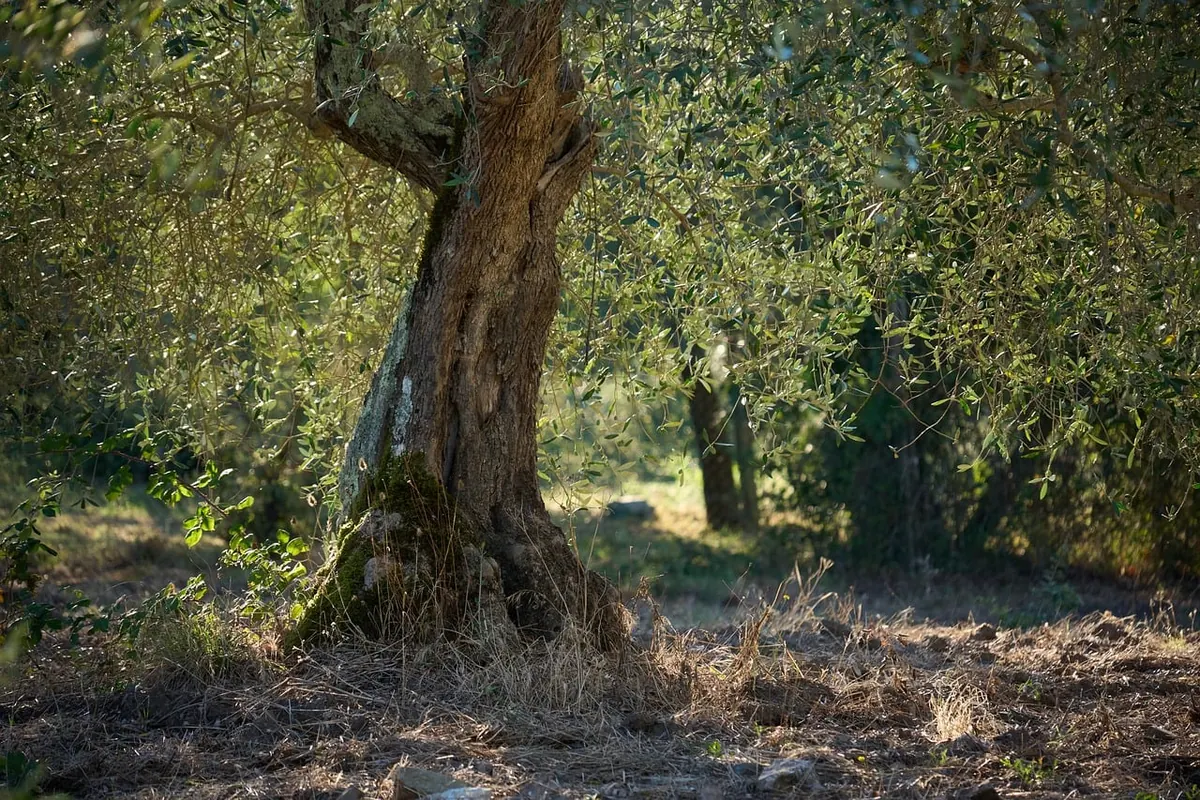
Growing olives in the UK is a long conversation with the weather. You are asking a Mediterranean evergreen to sit through wet winters, late frosts and summers that may or may not deliver enough heat for the fruit to ripen. It can be done — plenty of British growers do it in pots on patios, against warm walls and in unheated greenhouses — but the calendar you follow is not the one printed in Italian growing guides. Olive trees respond to light, temperature and water, not dates. What follows maps the jobs onto the British year, with the caveat that a grower in Cornwall and a grower in Aberdeenshire are working roughly a month apart.
January and February: dormancy, drainage and damage limitation
Olives are evergreen, but in a British winter they are effectively asleep. Growth stops once temperatures fall below about 10°C, and the tree simply endures until spring. The main threat is not cold alone — it is cold combined with wet. A tree standing in sodden compost through January is far more likely to die than one that is chilly but well drained.
So the winter job list is mostly about water:
- Lift pots onto feet or bricks so surplus water runs clear of the drainage holes.
- Empty saucers and trays. Never let a pot stand in a puddle.
- Move containers to a sheltered, south- or west-facing wall, away from the worst of the wind.
- Check stakes, ties and wall fixings after gales.
- Water only on mild days, and only if the compost is genuinely dry a few centimetres down.
Do not feed. Do not prune. Any cut made now is a wound that sits open until spring.
March and April: feeding, repotting and the first cut
March is when the light returns and the tree wakes. New growth may not be obvious yet, but the roots are starting to work, which makes this the best window for repotting container-grown olives. Aim to repot every two to three years, moving up a pot size only when the roots have filled the old one. A loam-based compost with plenty of grit suits olives far better than a light mix that dries out in a day.
Feeding starts in March or early April. A balanced fertiliser or a slow-release granular feed scratched into the surface is enough; there is no advantage in pushing soft growth hard in a short season.
Pruning waits. In most of the UK, late April is the earliest sensible point, and in colder areas May is safer. Cutting in February and then losing the new shoots to a frost in April sets a tree back further than waiting ever does.
May and June: flowers, pruning and steady watering
Olive flowers are tiny, creamy and easy to miss. They appear in late spring on wood produced the previous year, and they set fruit only if the weather is kind — a warm, still spell helps; cold rain does not. Once the tree is in active growth, watering becomes the single most important variable. Irregular watering is the usual reason flowers drop or fruit fails to swell. Little and often in a container beats a drench every ten days.
If you are pruning, early summer is the time. The aims are simple: open the centre of the tree to light and air, remove anything dead, damaged or crossing, and shorten the previous year's growth to keep the shape manageable. A rough order of work:
- Stand back and decide which three to five main branches form the framework.
- Remove dead, diseased or rubbing wood first — no difficult decisions there.
- Thin out shoots growing inwards or straight up through the middle.
- Shorten long extension growth by about a third, cutting back to an outward-facing shoot.
- Stop. Take no more than roughly a quarter of the canopy in a single year.
Olives fruit on one-year-old wood, so a hard prune in June generally means an empty tree the following autumn.
July and August: heat, feed and fruit
High summer is when a container olive earns its keep or sulks. In a hot spell a pot can dry out in a day; check by pushing a finger into the compost rather than trusting the surface, and water the compost, not the leaves. Morning is the best time.
Once the fruit has set and started to swell, switch to a feed higher in potassium — a tomato fertiliser is the usual choice — to support fruit development and keep the foliage healthy. On a young tree, thin nothing; the tree will shed what it cannot carry. Watch for scale insects in the joints of shoots and on leaf undersides, and for the sooty mould that follows them. A wet, still summer can bring leaf spot; better airflow and careful watering at the base help more than anything sprayed on the leaves.
September and October: harvest, curing and an honest look at the crop
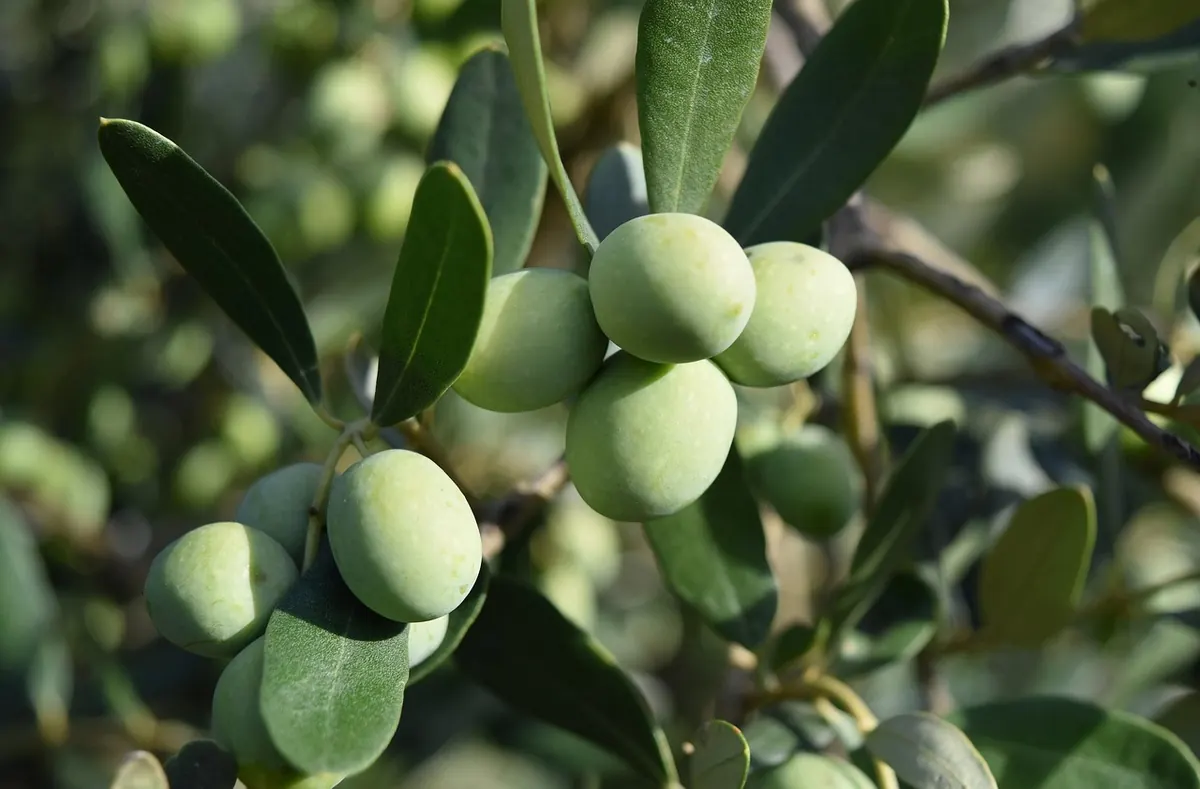
Olives ripen from green through purple to black. In most British gardens, only a hot summer pushes fruit all the way to black before the cold arrives, and many growers harvest green or part-ripened. Green olives are perfectly usable, but they must be cured — raw olives are intensely bitter. Brining takes weeks, and a dry-salt cure takes longer, so start early enough that you are not finishing the job in December.
Pick by hand or with a gentle rake into a net, working from the outside in and leaving the shoots intact. One tree will not give you enough fruit for oil, so plan on table olives or enjoy the crop as decoration. Stop feeding after harvest and let the tree slow down.
November and December: protection, and the value of dry roots
Cold is survivable; wet roots in cold soil are not. Before the first hard frost, move containers under cover — a cold greenhouse, an unheated porch, or tight against a sheltered house wall. A little airflow matters in a shed or greenhouse; sealing a damp tree into a closed space invites mould.
- Fleece around the canopy on forecast frost nights, removed again during mild spells.
- Bubble wrap or hessian around the pot itself, not just the trunk — the roots are the vulnerable part.
- A thick mulch over the compost surface, kept clear of the trunk.
- Reduce watering to a minimum; damp compost plus cold is the combination that kills olives.
Use the quieter weeks to plan. Order stock for spring planting, decide which trees need a bigger pot, and note where the winter wind does the most damage. If you garden in a cold county and are choosing a tree, ask a specialist nursery which cultivars perform best locally.
A workable rhythm for a British olive grove
Few UK growers have a grove in the Mediterranean sense. What most have is a collection of pots, a sheltered wall and a few young trees in the ground in the mildest counties. For trees planted out, the priority is drainage: plant on a slight mound, improve heavy clay with grit, and keep the root zone clear of winter standing water.
The rhythm to hold in your head is this: drain and protect in winter, feed and repot in spring, water steadily and prune lightly in early summer, switch feed and watch for pests in high summer, harvest and cure in autumn, then close the doors before the wet cold settles in. Get those six things roughly right and the tree will forgive the rest.