Best Cold-Hardy Olive Varieties for UK Gardens: A Comparison
No olive is hardy in the way a hawthorn is hardy. Even the toughest cultivars can be knocked back by a bad winter, and in most of Britain the cold is only half the problem. Yet variety choice genuinely matters. Two olives planted in the same garden can come through the same February in very different states, and the difference is usually genetics rather than how carefully you wrapped the trunk.
What follows is a working comparison of the varieties you are most likely to find for sale here, with an honest note on where each one earns its place.
What "Cold-Hardy" Really Means in a British Garden
Hardiness conversations tend to start and end with minimum temperatures, which misses the point. British olives are rarely killed by a single cold night. They are weakened by a winter of wet roots, driving wind and repeated freeze-thaw, and then finished off by a sharp frost in March when the sap is already moving.
Treat hardiness as three separate qualities: tolerance of low temperatures, tolerance of winter wet, and the ability to ripen fruit in a short, cool summer. A variety that scores well on the first two but ripens in late November is of limited use if you want a crop. An olive with wet feet in January is far more vulnerable than the same tree in free-draining soil against a south-facing wall.
The Main Contenders at a Glance
- Leccino — the benchmark for hardiness. Tuscan, moderately compact, ripens early enough to be useful here, and makes a mild, buttery oil.
- Frantoio — vigorous, hardy and self-fertile, with excellent oil content. Later to ripen, so it prefers a warm southern garden.
- Pendolino — the great pollinator. Small, slightly weeping, decent hardiness and light crops of good fruit.
- Arbequina — compact, precocious and generous. The best choice for pots and small gardens, though a touch less frost-proof than the Tuscan group.
- Coratina — very cold-tolerant and vigorous, producing peppery, high-polyphenol oil. Late ripening and a big tree; give it room.
- Cipressino — upright and hardy, widely used in Italy as a pollinator, and worth planting here for the same reason.
- Picual — Spanish, tough and drought-tolerant, with a robust, slightly bitter oil. Vigorous and late.
- Ascolana Tenera — the classic large-fruited table olive. One for a mild, sheltered spot only.
- Kalamata — beautiful fruit, tender tree. Treat it as a container plant for a conservatory or a very mild coastal garden.
Arbequina: The Safe Bet for Small Gardens
If you have one pot, one patio and one chance, Arbequina is usually the answer. It starts fruiting young, sometimes in its third or fourth year, and carries small, oil-rich fruit in quantity. It also stays manageable, needing little more than light pruning to keep its shape.
The catch is hardiness. Arbequina comes from Catalonia, where winters are brief and bright rather than long and damp. In Cornwall, central London or against a warm wall it will shrug off most of what Britain offers. On an exposed Midlands plot, expect some dieback after a hard winter, and protect the trunk and root zone until it is established.
Leccino, Frantoio and Pendolino: The Tuscan Trio
For colder gardens, this is where the money should go. Leccino is the hardiest of the three and the most reliable cropper in a poor summer. Frantoio is bigger and more vigorous, with superb oil content but a slower ripening fruit. Pendolino is the smallest and the one that makes the other two produce properly.
Plant them as a group rather than as lonely specimens: a triangle with Pendolino upwind works well, and even a distance of three or four metres is enough for wind-borne pollen. All three cope with winter wet better than most varieties, provided the drainage is sound. None of them enjoys sitting in a bog.
A note on ripening
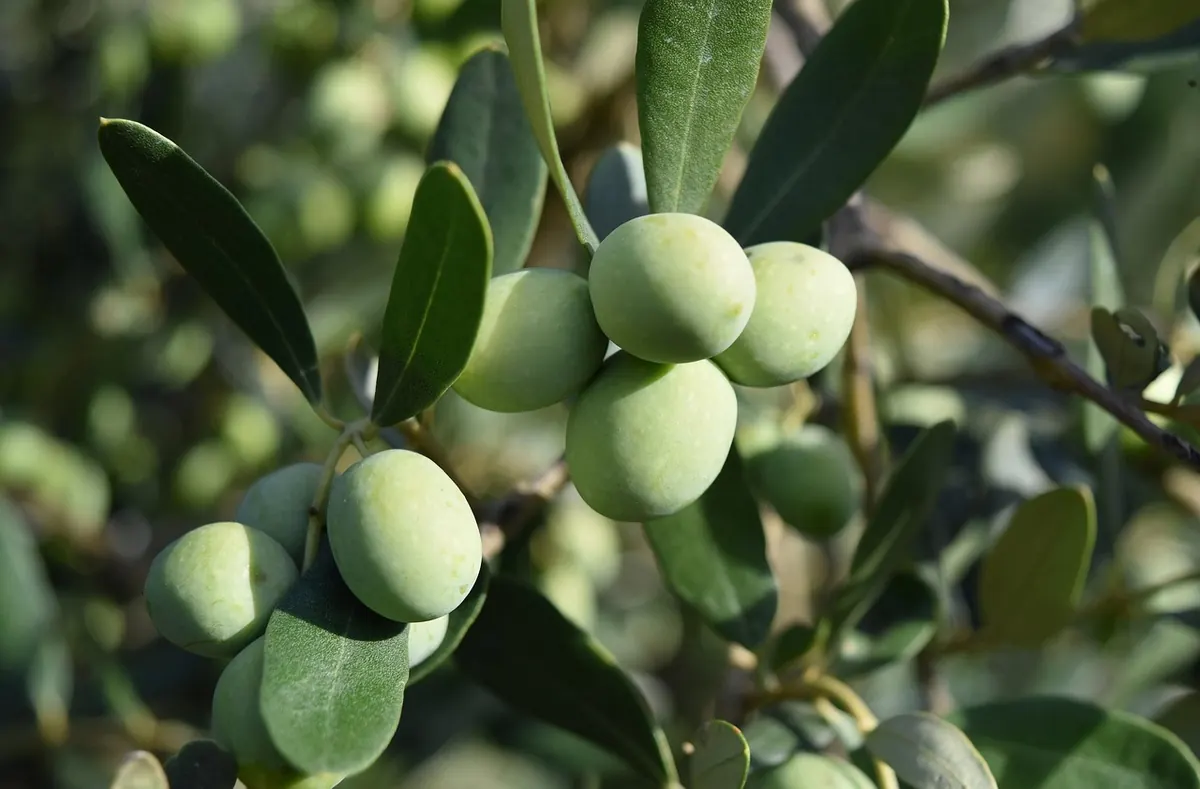
Olives move from green through purple to black as they ripen, and in the UK that process is often cut short by cool nights. That is not a disaster. Green olives can be picked in September or October and cured in brine at home, which is straightforward and gives a firmer, more bitter fruit. Waiting for fully black olives is only realistic on a warm, sheltered site with a long autumn.
Varieties That Struggle Here
The large Greek and Italian table olives — Kalamata, Ascolana Tenera and similar — need heat to ripen and sweeten, and their wood is less tolerant of hard frost. They are lovely plants, but they belong in a pot you can move under cover.
Be equally cautious about unnamed trees sold simply as "olive". You have no idea what you are buying, and it is often a tender seedling with no useful cropping record. Buy a named cultivar from a specialist nursery, ideally a two- or three-year-old plant that has already spent a winter outdoors.
Pollination, Site and the Details That Decide
Most olives are at least partly self-fertile, but cropping improves noticeably when two varieties flower together. Beyond that, the practical points matter more than the label:
- Choose the sunniest, most sheltered spot available: a south- or west-facing wall, a courtyard, or a raised bed. Aim for six hours of summer sun.
- Fix drainage before planting. If water stands in the hole after rain, add grit and organic matter, or plant on a slight mound.
- Plant two varieties rather than one — Leccino with Pendolino, or Arbequina with Frantoio.
- In containers, use a loam-based compost with plenty of grit, stand the pot on feet, and choose one at least 45cm across.
- Feed in spring and early summer only. Soft growth made after August is the first thing frost damages.
- Water sparingly in winter, and mulch the root zone. Protect young trunks with fleece or a wrap for the first three winters.
Making Your Choice
For a mild coastal or city garden, Arbequina will crop well and Frantoio will give you oil. For a colder inland plot, plant Leccino with Pendolino and accept that the crop will vary from year to year. If space is tight, one Arbequina in a large pot against a sunny wall beats three trees in a windy open border.
Be realistic about yield. A mature tree in a good spot might give you a few kilos of fruit in a fine year and nothing at all in a bad one — enough for a small jar of home-cured olives or a bottle of oil, not a harvest. Grow them for the grey-green leaves, the shape, and the pleasure of picking something Mediterranean in a British garden. The fruit, when it comes, is a bonus.
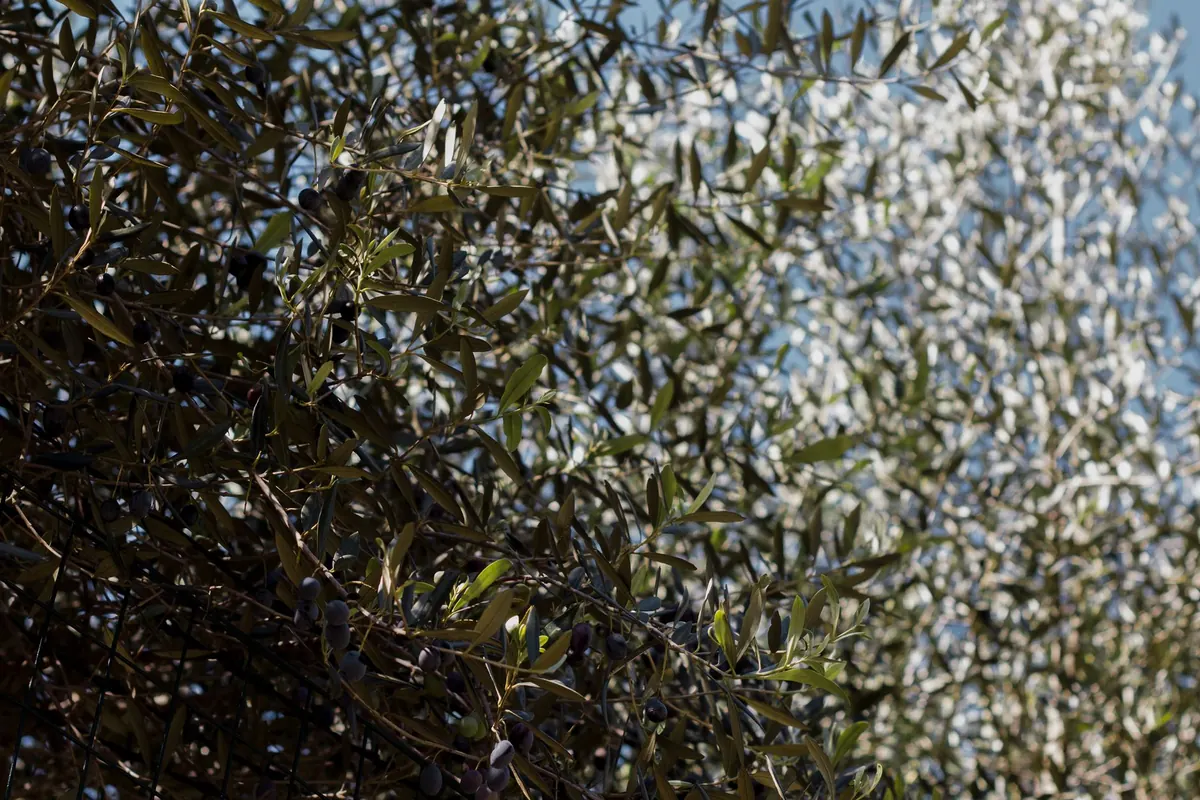
Photo: Vladimir Gladkov / Pexels